The call was on Sundays, and it was three minutes long.
You lined up behind the warden’s office where the black telephone sat on a stool under a cloth like something holy, and when your turn came you dialled the code and the number and had one hundred and eighty seconds, which the warden counted on his own watch and not on yours. Manu had learned to spend them carefully. He no longer wasted the first ten crying, the way he had in June. Now he said Amma once, cleanly, and got straight to the business of her voice.
“Are you eating?”
“I’m eating.”
“The morning ganji also? Not leaving it?”
“I’m drinking it, Amma.”
“Chinnu, you sound thin even on the phone.”
Nobody sounds thin on a phone. But he understood what she meant. She could hear the hostel in him, the early bell, the cold bath, the boiled rice and Mangalore sambar that was never her rice-and-sambar. From four hundred kilometres away, across the ghats, she was trying to reach through the wire and press her palm to his forehead. He let her try. The warden turned his wrist. Two minutes gone.
On the other six nights he had another way of hearing her.
It was a small red hardbound Gitanjali, Tagore’s own English, that had been hers before it was his. She had taught school before she married, and her maiden name was inside the cover in a younger hand than the one he knew. All through it, in pencil gone grey, she had underlined the lines that had once meant something to a girl he had never met. He read it under the sheet with a torch after lights-off. He did not always understand it, but if he read her underlinings slowly he could hear the book in her voice, and that was the closest to her lullaby he could manifest in that hostel room. Where the mind is without fear and the head is held high – that one she had underlined twice, with a star. He had it by heart before the periodic table, which would have horrified his father.
His father farmed a few acres near Tumakuru. Coconut, a little areca, ragi in the years when the rains refused to kiss the earth. His whole life was the narrow bright hope that his son would not have to plough the unkissed earth. It was a good decade for that hope. The country had been coming open for some years now. An uncanny scholar on his way to monkhood had ended up as the Prime Minister, when Manu was small, had torn up the old licence regime that kept everything slow and grey. Now an orator whose most potent weapon was poetry was the Prime Minister and he was pushing the same door wider. A great four-lane highway crossing the land within a morning of their fields, black-top climbing to villages that had never had a road, and, the marvel of marvels, the telephone gone cheap. His father did not read much of this in the paper. He saw it in the ground — the survey crews with their tripods, the neighbour’s son back from Bangalore in a collared shirt, earning in a month what the farm made in a season. He saw a single narrow staircase rising out of the red soil, and he meant to set his son’s foot on it before the country changed its mind, even if it cost him a strip of the land to do it and which, in the end, it did. The hope came out as science, the letters PCMB (abbreviated for Physics, Chemistry, Mathematics, Biology) standing over Manu’s timetable like a weather system. Everything bent toward the entrance exams two years off and already casting a shadow.
The residential school for Class 11 and 12 stood on a laterite hill above the coast, an hour from Mangalore. It belonged to a math — an old religious institution with a Swamiji whose garlanded photograph hung in every classroom. Before light each morning they sat in the prayer hall and recited the shlokas, and the sound of two hundred boys chanting in the salt air was, Manu admitted, a beautiful thing, even with your knees aching and your stomach loud.
The school was famous in three districts for its results. That was why his father had sold the land and sent him here, past a hundred closer colleges. They make ranks there, his father had said, as another man might say they make steel. Manu was the family’s plan for the future. It was a heavy thing to be, at sixteen.
------****------
Washing day was Sunday, after the call.
There was a line of stone slabs behind the dormitory and a tap that ran two hours in the morning and two at night, and every boy had a choice: wash his own clothes, or give them to the dhobi in the village, who charged by the piece. Almost nobody did. The dhobi’s fee was the same money that bought inland letters and STD calls – the money that carried your voice home. Every boy learned quickly the exchange rate of his own longing: a week of blistered knuckles on the stone was one more long Sunday call, or three letters, or a letter and a call with a little left over. So they knelt at the slabs and beat their shirts against the stone and saved the fee for their mothers.
The whole efficiency of washing depended on the brush. Most boys had the flexible kind, thin bristles that bent in every way but refused to put a fight against the stain on the clothes, so that a dirty collar took an hour. Manu had a good one. The right hardware in his hand, though he was clueless about it. Bristles like a boar’s, that took the mud from a hem in three strokes. It was, though Manu did not yet know it, the most valuable thing he owned.
Which was how Ravi came into his life.
Ravi was a clerk’s son. His father kept the ledgers at a cooperative bank in a small town near Hasan. He missed home too, but in a smaller, drier way than Manu — the way you miss a tooth that has been pulled: he did not cry after the Sunday call, he rationed his longing as he rationed everything. He liked to say that homesickness was a luxury item and he had not budgeted for it. He had studied Manu’s brush for two Sundays with the frank calculation of a man pricing a bullock. On the third he sat down at the next slab, put out his hand, and said, “Lend me that. I’ll be your friend.”
“That’s not how friends …”
“It’s exactly how friends,” said Ravi, already taking it. “You have a good brush and no friends. I have friends and a bad brush. This is called trade. The country is opening, haven’t you heard? Everybody’s at it.” He scrubbed his shirt clean in four strokes, sighed like a man who had glimpsed God, and handed it back. From then on he was there every Sunday, and then most days, and the trade quietly became the thing it had been pretending not to be.
------****------
The English teacher was a man named Shenoy.
He was not what a boy imagines when he imagines an inspiring teacher. He did not stride or thunder. He came in a little stooped, with a jute bag and a flask of black coffee, and taught in a low voice that made you lean forward, so the leaning became a kind of attention he never had to demand. He wore the same two weak-tea-coloured shirts turn and turn about. When he was pleased he did not smile so much as stop frowning, and you learned to watch for the stopping.
He had one rule, and it had cost every boy money: each would buy the unabridged Oxford dictionary from the hostel store. “The big one”, he said, holding up his own 1970s edition, thick as a brick, its grey boards worn soft at the corners, “not the pocket thing your cousin gave you” — and then carry it to the binder in the village to have it bound in hard board, because a paper spine would not survive one monsoon of hostel hands, and he meant these books to last a lifetime. Dictionary and binding together came to a real sum. There were letters home and finally the boys had the doorstopper on their desks. The method was simple and, the boys agreed, diabolical: when Shenoy met a word a boy did not know, he would not tell him. Look it up. Then read it out. Loud. For everyone. So the class inched through literature at the pace of the slowest looker-up, forty boys waiting while one slid his finger down the columns - perspective, noun, a particular attitude towards something. Shenoy nodding, again, until the word belonged to the boy who had found it.
“He doesn’t know the meanings himself,” Ravi announced, with total confidence, the first week. “That’s the whole racket. He can’t, so he makes us do it and we say thank you, sir. Beautiful.” Manu laughed with the rest. The boys would come to understand with time, which none of them could have said aloud — that a man might make you do a hard thing forty times because he wanted the hard thing to be yours, and not his.
What the theories missed was how much world Shenoy carried into that room. The syllabus said grammar, précis, one play. He taught as if every book ever written were one long argument human beings were still having with themselves, and he would not stay inside the fence.
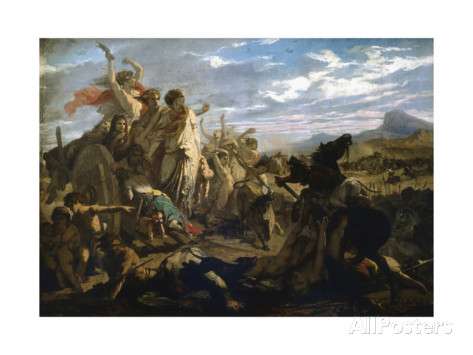
He gave them a poem by an Englishman named Shelley, about a traveller who finds, half-sunk in a desert, two vast stone legs and the shattered face of a statue — an ancient emperor, Ozymandias, who had once had it carved on the base that he was king of kings, and that the mighty should look on his works and despair. Around the wreck, nothing: bare sand to the horizon. The works were gone; only the broken boast remained. “You have all seen this,” Shenoy told them. “Every one of you has passed a ruined fort on some hill where a king once sat who was sure he would last forever.” The boys nodded; the hills were full of such forts. The poem, he said, was simply that hill fort put into fourteen lines, laughing very quietly at the word forever.
He often spoke to them of the epic Mahabharata. “Not the television one,” he said, “the real one, that does not let its heroes off after the war”. The day he told them its end, the boys forgot to be bored.
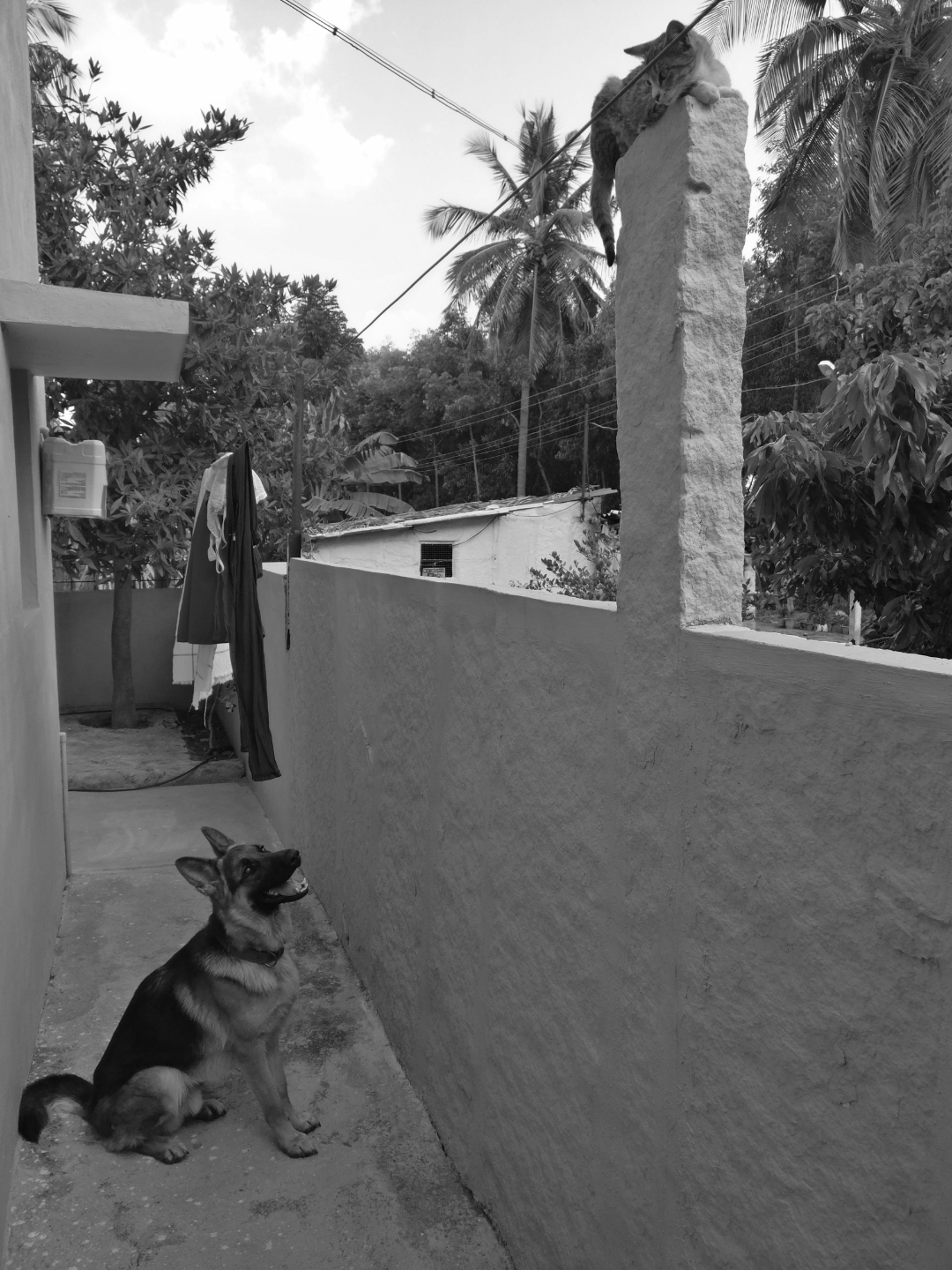
“After the whole war,” Shenoy said, “after everyone is dead, the eldest brother climbs the mountain to heaven. One by one the others fall on the way. Only a dog follows him to the top. At the gate the he is welcomed, but asked to leave the dog. And Yuddhistira who has lost his brothers, his wife, his kingdom, everyone chooses not to. I will not buy heaven by abandoning something that trusted me and followed me here.” He looked at them. “That is the summit of the whole epic. Not the war. Not the empire. A tired man at the gate of heaven refusing to leave a stray dog out in the cold. The dog, it turns out, was dharma all along.”
He set the flask down.
“And do not think this is only our idea. On the far side of the world, in the oldest poem the Greeks have, another war hero comes home – Odysseus, twenty years gone, ten of them at Troy and ten lost at sea. When at last he reaches his own door he comes disguised in beggar’s rags, so not one soul recognizes him: not his wife, not his servants. Argos, the pup he had raised before he sailed, now old and half-blind on a heap of dung by the gate, eaten with ticks, lifts his head, knows his master under the rags where no human can, wags his tail once and dies.”
Forty boys had gone still.
“Two epics, two victors of great wars - one at the gate of heaven, one at the gate of his own house - and in both, at the very end, it is a dog that tells you the truth about the man. The war poems make them heroes. The dog is how the poem finds out whether the hero is still human. Whether, after all that killing, you can be faithful to a creature that can do nothing for you and only loves you.” He capped the flask. “When men tell you greatness is the height you climb, remember the oldest poems measured it the other way. By the love for the dog.”
Shenoy had opinions, but never the ones the staff room expected, because they belonged to no side. When a boy repeated an uncle’s line about strong leaders and the country needing a firm hand, he put down his chalk and quoted Bertolt Brecht – “Unhappy the nation that needs heroes.”
------****------
It was a rainy, gloomy Tuesday afternoon. Shenoy read the marks the boys had the scored on the test, in his flat voice. At Ravi’s name the number stirred murmurs.
“Ravi, Fifteen.”
It was said that in all these years no boy had gotten more than fifteen out of twenty from Shenoy. Fifteen was the ceiling of the sky. And Ravi had hit that ceiling. But Shenoy went on nonchalantly.
“Manu. Eighteen.”
That paused the room. Someone actually said eh? Shenoy mentioned a number over fifteen! The ceiling in Shenoy’s legend was breached by a homesick farmer’s son who could not do a projectile-motion sum to save his life.
As the boys packed up, Shenoy said, not looking at him: “Your third paragraph. You argue that history is largely a negotiated settlement and truth is at most an approximation. Where did you learn to write like that?”
Hot in the face, Manu told the truth, because he did not know how to do anything else in that room - the red book under the sheet, his mother’s underlinings, where the mind is without fear.
Shenoy went still. Then he did a thing Manu had never seen: he recited the rest of it from memory, unasked - the poet’s prayer for a country where the world has not been broken up into fragments by narrow domestic walls, where knowledge is free and reason has not lost its way - looking out at the rain, as if it were private. When he finished, he was quiet a while.
“Keep reading her book. You have learnt a thing that matters: that a sentence can carry a whole idea of the world without once raising its voice.”
------****------
Manu signed up for the essay competition for a reason that had nothing to do with essays.
The circular said the district round would be held in Mangalore. One day out in the city, one bus, the school’s best in each event. And behind the word Mangalore, Manu did not see a competition. He saw a city with a board on every second shop, STD ISD PCO, and inside each a glass cabin with a red meter that ticked, where a boy with forty rupees folded into his sock could talk not for a hundred and eighty counted seconds but for as long as the coins held. Morning. After lunch. Before the bus turned back up the ghat. He could hear his mother three times in a single day.
He wrote home on an inland letter, pressing hard, so the words would come through on the far side. “Amma. On the fourteenth, I will be in Mangalore. Stay near the phone the whole day. I will call and call.” She wrote back to assure she would sit beside it with her knitting and not stir, and that she had worshipped the God of Dharmasthala to make his essay good, and to eat.
The topic, when it was named, was the kind these things always are - the idea of India. Manu carried his first draft to Shenoy on a Thursday, in the last gold hour of the light. He had opened it, because it seemed a grand way to begin, with the poem everyone half-knew - the one by the orator Prime Minister, that asked the people to light the lamp again and drive the dark back out of the house. Shenoy read it standing, twice, and set his pencil - never a red pen - beneath one small word.
“Whose house?”
“Sir?”
“You have written our house. The poem says the house. Not ours; not only the houses like ours.” He tapped the page once. “You have made the poet smaller than he is. Give him back his whole house.” He handed the sheet back. “And quote any poet, Manu, but garland none. A garland hides the neck it is put on. Remember to love the poem for what it says and not for who the poet is. That is the only honest love, and the only kind worth the ink.”
------****------
Mangalore, on the fourteenth, was hot and enormous and loud with horns. Ravi had come too. He was leading the school’s volleyball team. He was ferocity and skill in equal measure on the field. The two of them, loosed in a city for a day, carried the same secret plan, which had nothing to do with any prize and everything to do with the boards on the corners. Manu wrote his essay under a fan that did not reach him, gave the poet back his whole house, and did not think once about the marks. He thought about the booth. He found one in the two hours before the results, a green cabin at the mouth of a stationery shop, fed the man ten rupees, folded himself into the glass, and dialled; and his mother picked up on the half-ring, because she had been sitting beside the phone since morning.
“Chinnu!”
“Amma, it’s me, I’m in Mangalore …”
“Have you eaten? Since morning, have you eaten anything at all?”
They talked, the red digits climbing, and it did not matter, because he had bought them on purpose. He called again after lunch. He was in the same cabin, feeding it another ten rupees, when Ravi came pounding down the road, red-faced from his own call or from the running — Ravi had known without being told where to look, in a booth, of course, where else — shouting that the district was his, first place, and first place went up to the state round.
And the state round was in Bangalore. Two hours from Tumakuru. Two hours from home, from his mother, who was in his ear that very second asking what, what has happened.
“Amma,” he said, and his voice did the thing it had done in June. “I won. I’m coming to Bangalore. I’ll come home. I’ll see you.”
He heard her set the receiver against her chest — the muffled sea-sound of a mother’s heart heard close — and the meter ticked on, the best money he had ever spent.
He carried the news up the hill to Shenoy first, in the empty room in the low gold light. Shenoy put down his pencil, and the frown went all the way off his face, which on that face was a kind of sunrise. “You’ll go home, then,” he said. “You’ll see your amma.” That was all. He did not come with them to Bangalore; the school found its reasons, and Manu did not think, then, to ask what they were.
------****------
Then the largest democracy went to its voting. When the counting was done the man with the poems was no longer the Prime Minister. The boys went on with their calculus and their praying for ranks as though nothing under the sun had shifted, because for them it was the results of their exams that mattered and not that of the elections. There were new photographs in the papers the warden left on the bench, new names on the radio of an evening. The monsoon came down the coast and washed the walls clean of last season’s posters, and it was long after the rains, the sky gone high and rinsed, that the letter came calling Manu to Bangalore for the final.
Manu had chosen to open this one, too, with a poem, again from that poet who was no longer the Prime Minister. A poem about the great peaks: the tallest of them, where the snow never goes, where nothing grows and no bird will build and no traveller, however tired, can climb high enough to rest. The poet, who might have set himself upon any summit he pleased, prays to be brought a little lower — down to where the trees still hold, and a man can bend to take a stranger in his arms. Manu had carried it over from the Hindi into his own English as best he could, and it came out stiff in the joints — a boy's translation, true to the imagery and the plain sense, but not yet able to catch the thing that makes a poem a poem: the meaning that lives in the gaps between the lines, unspoken, at once political and philosophical, that no dictionary explains, and that makes men of boys by the time they can carry it across.
Shenoy read it twice and did not reach for the grammar first. “You have the meaning,” he said. “Now find the nerve of it. He is not describing a mountain, Manu. He is refusing one. Every man you meet will want the highest place — to stand so far up that nothing can reach him. And here is one who had climbed as high as this country lets a man climb, saying: not so high; that high is only snow; leave me where something can still grow, where a tired man can sit down beside me.” He handed the sheet back. “Write it so the reader feels the cold at the summit and the warmth below it in the one breath. That is the whole poem. That is the argument, if you care to know it — the only one worth making about any height a man is offered.” The frown lifted, briefly. “You will read it better in twenty years. And worse, when the climbing is your own.”
Bangalore in the early morning was colder than the coast ever grew. Thirty of them sat in a hall to pen their essays, winners from each district, arguing for the democracy of their dreams.
Manu voiced an aspiration more than a dream. He took the ruined forts on their own hills; he asked for a nation supple enough to bend in the wind and the storm and not break; he wanted the honesty of the old epic that loved its heroes too well to let them off, and a greatness measured not by the height a man climbs but by whether, at the summit of the last mountain, he will leave the dog. He wrote that the country he wanted was one brave enough to tell itself the many lived truths — to set no ruler on a pedestal his deeds could not carry, to gild no one — and that such a country, if it ever came, would be low enough to walk home to in the evening, to a lit doorway, to someone waiting with her hand held out to feel whether you had a fever. He did not write that he meant his mother. He did not have to.
------****------
That afternoon, while the thirty were loosed on the city, three people who had to choose sat in a room above the hall and could not, at first, agree. Twenty-nine essays they had set aside; the thirtieth lay in the middle of the table and would not let them alone.
“It is the best thing here,” said the schoolmaster on the panel, a tired man who read hundreds of these in a year. “It is not close.”
“No one says it isn’t well made.” The second, a careful man from the department, turned the first page without reading it. “I say look where it comes from.” The name of the school stood at the head of the form; they all knew the kind of place it was. “And how the boy opens it. With him. That poem. This year, of all years.” He let the year hang there, the way everyone had lately learned to leave it. “There are committees sitting even now, going through the books line by line, deciding who stays golden and who comes out. And you would put a prize in the hand of a child from a school like that, for reading the way this one reads. You don’t think somebody, somewhere, keeps a list?”
“It does not gild the man,” the schoolmaster said. “It reads him truer than the ones who shout his name.”
“It opens with him.”
The old woman in the chair had not yet spoken. She had been teaching longer than either of them had been alive, and when she laid her hand flat on the page the two men went quiet. “The boy took a poem about a mountain,” she said, “and saw that the poet was refusing the mountain. He hung no garland on the man and tore none off him — he read him clear of every flag that others have wound round him. There is an aspiration he voices which is beyond the individual, beyond the ideology. Genuine aspiration is the one thing, the only thing, we are sitting here to reward.” She turned to the careful man. “You would deny him for the letterhead on his page and the temper of the year. That is not judgement. That is the very thing the poem is warning us against — the cold at the top, where nothing grows.” She slid the essay to the centre of the table. “As the chair, I award it the first place. And if anyone should ask, you may say the old lady insisted.”
------****------
There was no holiday in it, no going home in triumph. There was only an afternoon and a night before the buses turned back, and home was two hours down the very highway his father had watched them build. So he did the sum the way he had once done it in a green booth in Mangalore, and stole it — a bus at dusk, a bus before light, a few hours in the fold between. He told no one at the event. He was not there to receive the prize the panel had awarded. He did not even telephone ahead.
He got down at the familiar stop as the light was going, and walked the lane he could have walked blind, and a lamp was already burning in the one doorway, and his mother was in it before he reached the gate, because she had heard the bus; she always heard the bus. She did not ask about the essay. She put both her hands to his face and laid one flat on his forehead — the old test that four hundred kilometres had cheated her of all year — and asked what she had asked down the wire every Sunday for a year.
“Have you eaten?”
“I’ve eaten, Amma.”
“You’re thin.”
“I’m not thin.”
He was thin. He let her not believe him. He had four hours. He spent them at her table saying nothing much, which is the best kind of saying, and before light she filled a steel tiffin with ganji he did not need and would not refuse, and stood in the lit doorway until the bus took the turn and the lane went dark behind him.
------****------
He came back up to the coast the next morning. Only to discover he had won the prize and lost the teacher. Shenoy's room had another man in it, a brisk young master who marked in red and told the boys straight out what the words meant, so that no time was wasted. Shenoy sir, they said, was suspended. There had been a textbook committee, and Shenoy had refused to sign off the inclusion of a hagiography of a hero.
Manu had to run to his desk to find out what the word meant. Ravi was already there, the dictionary open. Manu ran his finger down the column — hag, haggard, haggis, haggle, hagiography — then across it: hagiography, noun. a book about a person's life that praises them too much; this kind of writing.
Ravi set a slim taped book on the desk beside it. “He left it with me,” he said, before Manu could ask. “For you. Said you’d come looking.” He turned it over: old, the spine mended, poems by a name neither of them had heard before — Kahlil Gibran.
Manu sat on the desk beside him. For a while neither of them said anything.
“He should have signed it,” Manu said at last, and the heat in his own voice surprised him. “Whatever it was. One chapter. One lie in one book among a hundred. He could have signed it and stayed, and taught for twenty more years — two thousand more boys to look things up, to garland no one. That is more good than being right about a dead king in a room with no boys left in it.” His voice thinned. “He threw that German line at us once — unhappy the nation that needs heroes. Well, I didn’t need a hero. I needed a teacher, at the front of this room, on Monday. And he taught us himself how you weigh a man — not by the war he wins or the height he climbs, but by whether he’ll leave the dog. Yudhishthira wouldn’t, at the very gate of heaven. And then he climbed up to his own heaven, being right, and left us at the gate. We were the dog, Ravi. Forty of us, every morning. He chose to be right, and he left the dog out in the cold.”
Ravi turned the book over a long moment, and when he spoke it was not his joking voice.
“Left the dog.” He weighed the words like coins. “You’ve got it the wrong way round. If he’d signed and stayed, he’d have kept the dog by his chair and fed it a lie every morning — the man who told you to garland no one, laying a garland on somebody to keep his own seat, and calling it staying for your sake. That is not faith with the dog, Manu. That is the comfortable way to betray it.” He tapped the taped spine of the book. “You know what he taught, better than any of us; you just don’t want it today, because you’re the one he left. Some things you can’t buy the cheap version of. He said that about the dictionary. Turns out he meant it about everything.”
Manu had no answer that would hold. He took the book because his hands wanted something to carry. On the flyleaf, in the hand he knew from the margins of his essay drafts, was written only: Admire the worthy poem irrespective of the poet. He let it fall open where it would, the way you do with a book you are exploring for the first time, and read the lines his thumb had come to rest against.
“The teacher who walks in the shadow of the temple, among his followers, gives not of his wisdom but rather of his faith and his lovingness.
If he is indeed wise he does not bid you enter the house of his wisdom, but rather leads you to the threshold of your own mind.”
------****------