Apr 11, 2012

A lot of difference.


“Sar Zamin-e-hind par aqwaam-e-alam ke firaq
kafile guzarte gae Hindustan banta gaya”
(“In the land of Hind, the Caravans of the people of
the world kept coming in and India kept getting formed”)
- Firaq Gorakhpuri  
    

       Despite the tremendous strides we have achieved as a nation and society, the ill feelings between ourselves owing to our religious differences have not totally  vanished. They sometimes appear to be consciously watered. Hatred being fed into young minds on various pretexts. The growing religious extremism haunts us mainly at two levels, as I perceive it. One, at the mass level - leading to various communal clashes. Two, at the intellectual level - leading to gross misconceptions about our religions and the true ideals they preach. 
         Though we claim to be highly educated, a large chunk of the educated class is yet to shun of its preoccupations on religious misconceptions. The never ending suspicion about the guy who wears an orthodox dress, lack of respect to a teacher whose accent supposedly reveals his religion, the foolish assumption that bearded guys are either of a particular religion or are a depressed lot. (God! How frequent a victim I have been to this assumption, all thanks to the beard I sport, well complemented by a supposedly dumb face!) Why, why these baseless set of reasoning? Why these shameless set of attitudes? Why this kolaveri di?
        As I shuffled through the pages of The Hindu (Apr 10, 2012), a newspaper which has become much more than a part of my life, I came across this very interesting letter from a reader. The letter is the precise piece which triggered this blog post.(I have taken the liberty to publish the letter on this blog, copying as it is from the official website of The Hindu here: http://www.thehindu.com/opinion/letters/article3297788.ece).

Brilliant

      In his brilliant article “A Sufi message from a Pakistani President” in the OpEd page of The Hindu (April 9), Saeed Naqvi mentions that Hasrat Mohani “… fancied that God had sent prophets to every country and the one he sent to India was Lord Krishna!” Nawab Akbar Yar Jung was a Judge of the Hyderabad High Court in the Nizam's Government. On August 11,1936, he addressed a meeting on the occasion of the Krishna Janmashtami in which he quoted the Holy Quran, 49:78, “We sent Apostles before Thee: there are some of them that We have mentioned to thee and others we have not mentioned.”
     “The Hindus; they accept Ramachandra and Shri Krishna as their religious leaders. We must therefore unhesitatingly accept them as prophets. I belong to a much hated sect of people who already hold this view. I do not hesitate to accept Shri Krishna (upon him be peace) as a prophet.”
      That reads as Krishna Alehsalam — a honorific not lightly used; Jesus is — Isa Alehsalam. There was a protest in Hyderabad against this speech and the Nizam reprimanded Bahadur Yar Jung. But no adverse action followed. That shows the catholicity of that government, chiefly due then to Sir Akbar Hydari, a Bohra.
       I think Nawab Akbar Yar Jung was an Ahmediya. He was the father of my dear friend and classmate Prof. Rasheedudeen Khan. When as a teenager, I spent my holidays with them, Nawab Sahib used to say to me, “Mian, Main Krishna Janmbhoomi ka hoon. Yeh log nahin samjenge!” Rasheed's mother was a Hyderabadi! Sir Mohammed Iqbal called Rama, Imam-i-Hind. Nawab sahib was calling Krishna a prophet, alehsalam. For those who understand these niceties, there is a lot of difference.
B.P.R. Vithal,
Hyderabad

        How beautiful! People of tolerance and acceptance are those who add to the faith and hope that one day all of us shall no more derive our identity based on the religions into which we were born but we shall take pride of the truly secular society in which we live. Everyday all around us are such souls of compassion and humanism. The ordinary men and women we encounter everyday and who make our every moment's peaceful co-existence a reality are actually extraordinary. Despite the lot of difference in their beliefs and culture it is the strength of this diversity that has kept the subcontinent alive and colourful. A responsibility each of us has to shoulder is to better it.
          Not long back, during the days of the controversy regarding the inclusion of A K Ramanujan's essay of 'Three hundred Ramayanas' in Delhi University course, I read an interesting anecdote in a magazine. An ex-judge of the Tamil Nadu High court, I don't remember his name exactly, probably Justice Hidayatullah was during his time considered the foremost authority on the Tamil epic Kamba Ramayana. Interests and curiosities know no barrier of religion and geographic boundaries, then why enforce them on the beautiful lives of posterity?
         As I read through the letter, I was reminded of these immortal lines, penned by the inimitable Sahir Ludhianvi -
तू हिन्दू बनेगा ना मुसलमान बनेगा
इंसान की औलाद है, इंसान बनेगा ।
....
नफरत जो सिखाये, वो धरम तेरा नहीं है।
इन्साफ जो रोंदे, वो कदम तेरा नहीं हैं।
कुर'आन ना हो जिसमे वो मंदिर नहीं तेरा,
गीता ना हो जिसमे वो हरम तेरा नहीं है ।
तू अमन का और सुलह का अरमान बनेगा।
इंसान की औलाद है, इंसान बनेगा ।
....
(Neither a Hindu nor a Muslim shall you become.
A human progeny are you. A human shall you become
......
Which preaches hatred, that religion is not yours.
Which tramples justice, that footstep is not yours.
Where is no Qur'aan, that temple is not yours.
Where is no Geeta, that Mosque is not yours.
An apostle of peace and harmony shall you become.
A human progeny are you. A human shall you become
......)

        The letter also took me down the memory lane. As a middle school kid, I was lucky to be taught Hindi and History(Social Science actually) by two Muslim teachers. I still remember how balanced the History sir would handle the subject of Muslim invasion into India and the growth of Hindu kingdoms down South. Though the delicacy of the issue was beyond my perception back then, I marvel at the ability of such teachers who assure objectivity and avoid flawed extremism from being sowed into tender minds. Both of them loved to play Cricket and we children got to play with them a few afternoons during the recess. Though I frequently dropped catches, I picked up the beauty of Urdu as a language. I do owe my present craze for Ghalib's poetry to those gentlemen.
        A few months ago, an elderly Muslim friend invited me to his new textile shop inauguration ceremony. Though I prefer to avoid ceremonial events, I chose to attend this one. He was indeed a very long acquaintance and there was no dearth of feel good moments despite decades of age difference between us. Unaccustomed with their tradition, I went to the venue well in time for the occasion. I wore a shirt and trouser unlike everyone else who were dressed in ceremonial kurtas, with the white topi adorning their heads. It was apparent that I had walked in too early and was obviously the odd one out. Minutes later the auspicious rendering of prayer was supposed to begin. It was a very small shop, hardly accommodating fifteen of us. The Maulvi looked at the owner, my friend and maybe his eyes questioned my presence. As I stood up to walk out, the gentleman - my friend held me and asked me to sit by his side in the very forefront. He told the Maulvi - "Apna hi ladka hai". The next fifteen minutes I sat through a blissful rendition of prayer, much of which I did not understand, but did get the feel of 'ameen'. 
         Yes, for those who understand these niceties, there is a lot of difference.

Apr 9, 2012

Lost or Won?


As always, the angel and the devil were engaged in a duel of words.
"I lost because I wanted to. Sometimes I yearn to be called a failure."
"But it is not failure when you succeed to fail."
"When you want to win and you win, its a victory - a success. When you want to loose and you loose, it has to be defeat - a failure."
"Not all defeats are failures. You have got what you wanted."
"To get what you want, need not be to have succeeded."

Mar 30, 2012

Climb.


We know not why we sing in rhyme.
We know not if we sing in rhyme...
We know not why to the top we climb.
We know not if to the top we climb...

The ladder is long, awaiting us climb.
To climb beyond and scale the summit.
The future is blur, unconcerned we climb.
To climb beyond with no eye on the summit.

Why climb if not to scale the summit?
Because there are interesting species to meet.
Fruits - tasty to eat; Flowers - beauty to greet.
Rugged terrains to explore - unique and discrete.

To scale it a feat, just because it is the peak?
To do only because it is to be done is no tweak.
The dance and treat, to us all sounds Greek.
The higher dreams, we climb to discover and seek.

As we climb and rhyme, the cliff does shine.
Abandoning the climb, we realize we are inane.
Head to the cliff, Assure we are absolutely fine,
Take a breath, Jump off the cliff and fly insane.

We know not why we sing in rhyme.
We know not if we sing in rhyme...
We know not why to the sky we fly.
We know not if to the sky we fly...

Mar 14, 2012

पिया तो से मन लागे रे

पिया तो से मन लागे रे
जहाँ भी जाहूँ तेरे याद आये रे।

तू जैसे बहती हवा
न जानू खुदा के घर का पता।
तू जैसे उडती फिज़ा
न जानू मुझको क्यूँ ऐसी सज़ा।
तू जैसे दिखती समा
न जानू कैसी अंधे थे हम वहाँ।

पिया तो से मन लागे रे
तेरे लिए मेरी नज़रे तरसाये रे। 

कब क्या करे
तेरे यादो में ना जाने रे।
अब यूँ डरे
तेरे बातो में दिल तामे रे।
जब सर फिरे
तेरे राहो में गुमराह जाये रे।

पिया तो से मन लागे रे
बिन तेरे कैसे जिया जाये रे?

कहना भी चाहूँ
दिल की हाजारों आरजु तुझसे यूँ।
मनाना भी चाहूँ
जो मुझसे रूट गए हो तुम।
मरना भी चाहूँ
खुदा के महफिल सजाने मै भी आहूँ?

Mar 10, 2012

The white among the blues!!

        
"... gladiatorial intensity and monkish one pointedness of purpose; .. glint in the eyes, the eyes of a born warrior marooned in the belly of the Sahara desert with less than a day's ration left...."
                                                       - Nirmal Shekar, talking of Rahul Dravid.

       As middle school kids in the late 90s, only two things in cricket made sense to us. The runs scored by Sachin and the deliveries 'consumed' by Dravid. We, most of the times, cursed the later for 'wasting' deliveries. (He does hold the world record for facing highest number of deliveries in Test cricket - a whooping 31258!) ODIs, back then to us, meant nothing more than a full furnished version of the 'hit the ball with the bat' game we played on the streets, in the classrooms and into the kitchen!
      Only as age grew, the charm of test cricket got revealed. Then did I realize, however nail bitting a thriller was, the beauty of romancing poetry would be the most pleasing of all reading exercises. Then did the craze for men in blue die down and was born the benign bliss of watching the monk in white mediatate through innings of mammoth duration with almost absolute resoluteness. The calmness and dignity, the steadfastness and selflessness - Sometimes, I wonder if Dravid was that philosopher who preached only by practicing.
       For most in our generation, born after the Gavaskar and Kapil Dev era into the Tendulkar regime, Indian test cricket and Rahul Dravid are synonymous. Even people who never understood a speck of Test cricket would watch a few overs when the Dravid in white held fort. To be bathed in the radiance of his patient approach were moments to be cherished for.
      If as in football, a list of best defenders would be made in Cricket, not many would deny Dravid a rank at the helm. It was not for no reason that he was called 'The Wall' or 'Mr.Reliable'. He was that breed of batsmen who put the highest price on their wicket. No bowler was ever given his wicket, the bowler had to toil to take it. Years ago, rushing out of an exam hall, I called a friend to ask him the score. He told - "Pray God to save wickets at one end." Any guy could have understood Dravid stood at the other end.
      A second fiddle like no other, Dravid has been part of some extraordinary partnerships in cricketing history. Many fine innings of Tendulkar, Ganguly and Laxman were carved out in Dravid's company. He stood along when they stood, he stood alone when none stood. In a game of uncertainties, Dravid was for long the certain guardian. Though a specialist No.3, he did open the innings when the team needed him to or came in late at No.6, when that was asked of him. How forget the days when he kept wickets in a bid to stabilize the team's make up.
       While men of muscle skied the ball across the boundary, Dravid was more of an artist who worked for the singles and twos as if engineering his way to pursue them. Despite the storms, downpours or scorching heat - the likes of Waqar Younis, Glenn McGrath or Allan Doland - Dravid would water the seeds of an innings unperturbed and see through every stage of its growth, fighting with the grit of a never-die spirited farmer who gave all his to ensure the plant flowered and bear fruits. However high the stakes or however immense the pressure mounted, never a sign of rage. If Indian cricket is an orchestra troop, whose soothing music we have enjoyed, then the invisible conductor whose face has seldom hogged the limelight is Rahul Dravid. Always calm, composed and beyond doubt the man for all seasons, either on field or off field.
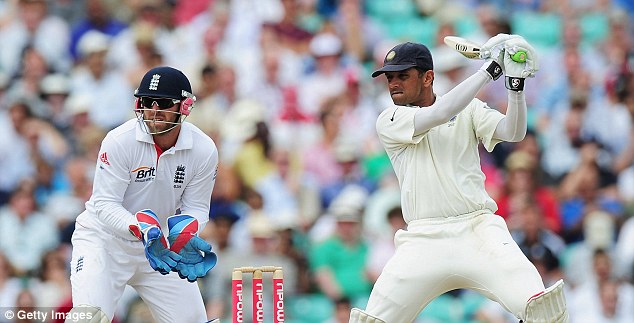
       As I close my eyes and think of Dravid, to my mind always comes a picture. On a field among men in blue I see him in white. He is all set to face the delivery. Shifts body weight to the back foot, waits for the ball and plays his characteristic late cut so late that it appears as if he just pushed the ball out of the keeper's gloves. Before I can completely grasp the beauty of it, he is out of his crease and running.... This time, not to come back again...

Mar 4, 2012

ನಮ್ಮಯ ಬಾಳಿನ ಕತೆಗಳು.

ಜನನದಿ ಖಾಲಿ ಹಾಳೆಯು,
ಮರಣದಿ ತುಂಬುವವು ಪುಟಗಳು.
ಬರೆವೆವು ಬದುಕಿಹ
ಕ್ಷಣಗಳಲಿ
ನಮ್ಮಯ ಬಾಳಿನ
ಕತೆಗಳನು.

ಅಳತೆಗೆ ಸಿಲುಕದ ಅಲೆಗಳಿವು,
ಕ್ಷಣ ಉರುಳುವಲಿ ಏರಿಳಿವುವವು.
ಏರುತ ಇಳಿಯುತ
ಆಡುವಲಿ
ಕಲಿವೆವು ಬದುಕುವ
ಸೂತ್ರವನು.

ಅಲ್ಲಗಳೆದು ಆಡುವ ಆಟವನು
ಕಟ್ಟಿಕೊಂಡೆವು ಸ್ಪರ್ಧೆಯ ಮಾಟವನು.
ಎಡವದೇ ಏರುತಲಿರಬೇಕೆಂಬ
ಅನಿವಾರ್ಯದಲಿ
ಅಗ್ನಿಗಾಹುತಿ ಕೊಡಲೊರಟೆವು
ಸರ್ವಸಮ್ಮತಿಯನು.

ಏರುವ ಭರದಿ ನಾವುಗಳು
ತುಳಿವೆವು ಹಲವರ ಶಿರಗಳನು.
ಒಂದೇ ದಿಕ್ಕಿಗೋಡುವ
ನೀತಿಯಲಿ
ತೊರೆದೆವು ಸರ್ವತೋಮುಖ
ರೀತಿಯನು.

ಸೂತ್ರದಿ ಬೆಸೆದ ಕತೆಗಳಿವು
ಗಮನಿಸೆ ಕಾಣ್ವುದತಿ ಸೂಕ್ಷ್ಮವು.
ಕಂಡಂತಿದ್ದರು ಸಾಮ್ಯವು
ಮೇಲ್ನೋಟದಲಿ
ಕಾಣ್ವೆವು ಒಳಗಿಣುಕೆ
ಭಿನ್ನವನು.

ನಮ್ಮೀ ಕತೆಯನೋದುವ ಪೀಳಿಗೆಯು
ನಿರುತ್ತರರಾಗಿಯೇ ನಿಂತಿರುವ ನಾವುಗಳು.
ಎಲ್ಲರೂ ಸವೆವರು
ಕಾಲದಲಿ
ಮೃತ್ಯುಂಜಯನೇನ್
ಮಾನವನು?

Feb 29, 2012

Revisiting 221B, Baker Street!!


'Omne ignotum pro magnifico' 
(The unknown is always thought to be magnificent)
     This is my favorite phrase from Latin. A very true one. As long as we do not get to know someone from very close quarters, we look at them in awe. But on getting close and discovering their mortality and imperfections, the awe dies down. But, I am witness to an exception - the most extraordinary exception. The character, who introduced the phrase to me more than a decade ago still appears as magnificent as he did on that fateful day or probably even more! What an irony to call him an exception who always rejected them - "I never make exceptions. An exception disproves the rule." Yes, the magnificent one is none other than Mr.Sherlock Holmes!! 
      Tough to capture the essence of Sherlock in words. Or is he just beyond description? The best I have come across yet is his own! As he states in 'The Sign of Four': "There are in me the makings of a very fine loafer and also of a pretty spry sort of fellow. I often think of those lines of old Goethe - Schade dass die Natur nur Einen Mensch aus Dir schuf, Denn zum wuerdigen Mann war und zum Schelmen der Stoff. (Nature, alas, made only one being out of you, Although there was material for a good man and a rogue.)"
      Given his character, he could have gone on to be the best philosopher or scientist in the world of fictional literature. But, he was Sherlock and he had his own way of doing things - a way no one else could even think of!! "My mind, rebels at stagnation. Give me problems, give me work, give me the most abstruse cryptogram or the most intricate analysis, and I am in my own proper atmosphere. I can dispense then with artificial stimulants. But I abhor the dull routine of existence. I crave for mental exaltation. That is why I have chosen my own particular profession, or rather created it, for I am the only one in the world." The world's first and beyond doubt the best consulting detective! “The only unofficial consulting detective. I am the last and highest court of appeal in detection." One whose singular ability to deduce truth has never had any near competition in the universe.
       Holmes, the master of the Science of deduction, is not just a fictional character brought to life by the imaginative genius of Sir Arthur Canon Doyle; but is that charisma and enigma which has shaped the way detective fiction, criminology, forensic science, human psychology, the science of cognition, the philosophy of logic and reasoning have evolved over generations. He is of that rarest breed of characters who elevated criminal investigation to a fine art and a science demanding subtle observation and intelligent research. The impact of the over 150 year old character (his first appearance was in 1857) on the field is so profound that in 2002, the Royal Society of Chemistry bestowed an honorary fellowship of their organisation upon Holmes, for his use of forensic science and analytical chemistry, making him the only fictional character to be thus honoured! His influence on serious academic research is also noteworthy. Google scholar shows up the mention of Holmes in highly regarded research papers in fields as diverse as expert psychology, analytical chemistry and medical jurisprudence among many others.
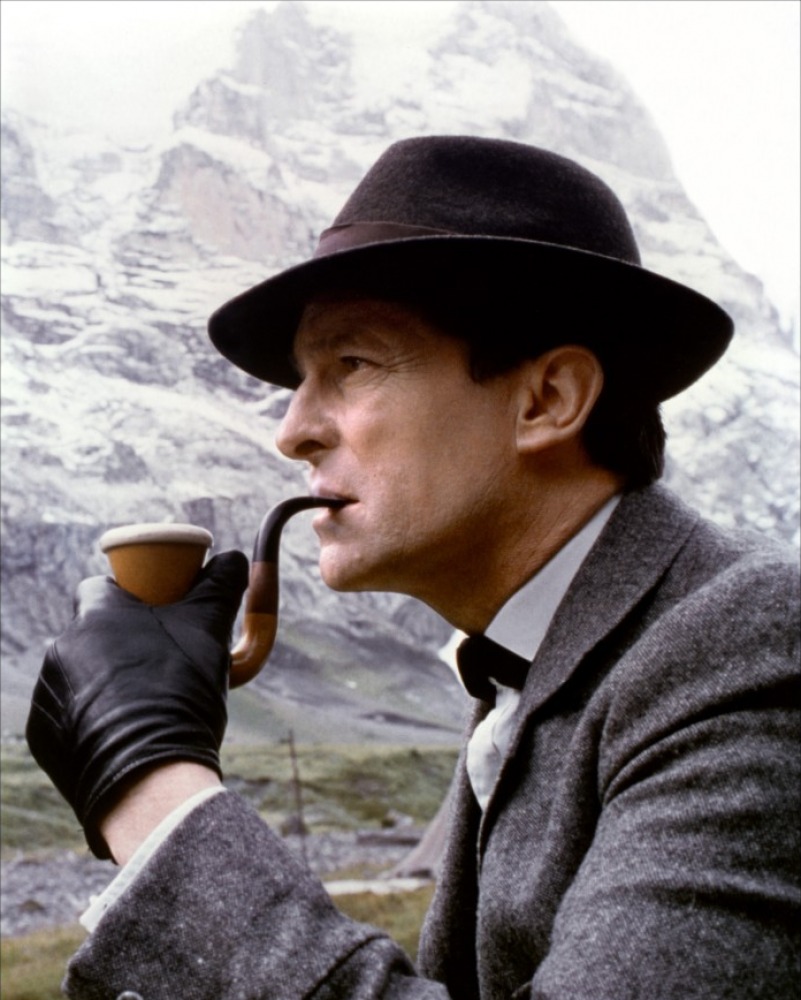
        He is also one of the finest intelligent entertainers - a hot favorite on stage and on screen as well. The Guinness World Records has consistently listed Sherlock Holmes as the "most portrayed movie character" with more than 75 actors playing the part in well over 200 screen adaptations and the list is still growing strong! (If you never watched 'Jeremy Brett' play Holmes to perfection, curse yourself for not yet catching up the performance of the bygone century! Also Benedict Cumberbatch does make a sound impression in the BBC's fine recreation of 'Sherlock'.)
Jeremy Brett as Sherlock on screen.
         The chemistry between Holmes, the character and Doyle, his creator is one which has no parallels in the realm of literature. Theirs was probably a duel like no other. Maybe Holmes out lived Doyle in all the ways. Doyle did almost kill Holmes in the 'Final problem', may be he was desperate to - "even if I buried my bank account with him," he wrote in his autobiography. He was relieved during the 'Great Hiatus', as is evident from his statement - "I have been much blamed for doing that gentleman to death, but I hold that it was not murder, but justifiable homicide in self-defense, since, if I had not killed him, he would certainly have killed me." But Holmes worked his way out! Doyle had to relent to the mounting pressure from publishers and public alike, Holmes reappeared in the 'Adventure of the empty house' outwitting death too! Despite the enormous success and following Doyle enjoyed, courtesy Holmes, he actually complained in his later years - "If I had never touched Holmes, who has tended to obscure my higher work, my position in literature would at the present moment be a more commanding one."
      We talk of Holmes and we don't talk of Watson, we are not talking of Holmes! Or, as Holmes himself rightly pointed out, “Where would I be without my Boswell?” One of the finest friendships, with its unique intricacies. I don't think it an exaggeration to say, any guy shall feel jealous of Holmes for having a companion as good as Dr.Watson! "Come at once if convenient — if inconvenient come all the same" is how Holmes sends for Watson! Though very cold blooded and never a man for sentiment, Holmes has a very special regard for Watson, which is seldom revealed. Except in an adventure where Watson gets hurt and recalls it as a worthy wound, "it was worth many wounds - to know the depth and loyalty of love which lay behind the cold mask. The clear hard eyes were dimmed for a moment, and the firm lips were shaking. For the one and only time I caught a glimpse of a great heart as well as a great brain."
       Despite Watson's claims that Holmes' "ignorance was as remarkable as his knowledge", Holmes does at times appear to be a polymath. He quotes from Goethe, remembers details of little known historical facts, his knowledge in Chemistry is simply amazing and the geography of London is a child's play to him! Maybe he knew too well that to master the important, the biggest prerequisite was to recognize and leave behind the unimportant. 
     Why does his character stand out for more than a century and a half, that too in times of such immense changes? Because there was none like him before and there can none ever be like him, except him. As straight forward as it gets - "I cannot agree with those who rank modesty among their virtues. To the logician all things should be seen exactly as they are, and to underestimate one's self is as much a departure from the truth as to exaggerate one's powers." Absolutely logical, unflawed reasoning - "It is an old maxim of mine that when you have excluded the impossible, whatever remains, however improbable, must be the truth." Undying yearning to learn - "Education never ends Watson. It is a series of lessons with the greatest for the last." Much beyond us, but still like us - "It was easier to know it than to explain why I know it." The most vigilant eyes, tailor made for detail - "You see, but you do not observe. The distinction is clear." Subtle and subtle to the core - "It is, of course, a trifle, but there is nothing so important as trifles."
      Holmes is one of variety. Each Holmesian has his own reason to adore the Master. Despite the differences, he is never less than an obsession to each one. What work and cocaine were to Holmes, that is Holmes to us. For me, what absolutely stands out in the master sleuth is his philosophy towards life. There is no dearth of philosophical insights in his monologues and punch lines - "Everything in this world is relative, my dear Watson."; "When one tries to rise above Nature one is liable to fall below it."; "Life is infinitely stranger than anything which the mind of man could invent." He can go on and on like this for a very long time. Credit, recognition, fame were never among his incentives. To him work and work alone was the source of all pleasure in life. Cocaine served as a feeble substitute in the absence of challenging work. "The work is its own reward." - the line by which he lived and almost died! His clarity in this approach never witnessed a change. It was always - "I prefer to work anonymously, and it is the problem itself which attracts me." Never could the temptation of jumping to conclusions beat him - "It is a capital mistake to theorize before you have all the evidence. It biases the judgment." A fair acceptance of he too being a mortal like us despite his far reaching abilities - "Slips are common to all mortals, and the greatest is he who can recognise and repair them." 
       Never the one to get carried away by emotions, Holmes does respect the emotions of others. "I have never loved, Watson, but if I did and if the woman I loved had met such an end, I might act even as our lawless lion-hunter has done. Who knows?" Though in a handful of cases he lets go of the one who commits a crime when the circumstances make the crime justifiable, he is not the one to expressly voice his opinions on their acts. "It was my duty to bring the facts to light, and there I must leave it. As to the morality or decency of your conduct, it is not for me to express an opinion." 
         Holmes does seem arrogant. He is at times a bit over confident, but what difference does exist there when you are dead sure of it?
"I followed you."
"I saw no one."
"That is what you may expect to see when I follow you."

       I too like Watson "had no idea that such individuals exist outside of stories." But I think I may be wrong because I don't see anyone and how I wish I am being followed!!